The Art of Bending

Without a doubt, one of my all-time favourite TV-aired series is Avatar: The Last Airbender. The animation is a blend of anime and western domestic cartoons, with the result being a fluent, dynamic, superbly vibrant visual feast.

The story is set in a world heavily inspired by Asian art and mythology, where people have the ability to manipulate one of the four elements (Water, Earth, Fire and Air), through a form of martial arts known as “Bending”. In addition to the focus on these four classic elements in the series, the fighting styles associated with each element are all taken from different styles of Chinese martial arts.

For “waterbending”, Tai Chi was used, namely for its focus on alignment, body structure and visualisation; and if you have watched any of the episodes where you see the waterbenders in action, that chosen art suits the element perfectly; movement of the body and constant visualisation would be key to maintaining control of a substance as pliant and variable as water.

For “earthbending”, Hung Gar was chosen as it has a lot of firmly rooted stances and powerful strikes that effectively present the solid nature of the earth. The idea of requiring strength in stance, and abrupt, directional movements works well under the concept that something as rigid and heavy as earth can be manipulated by a being equipped only with his/ her physical and mental energy.

For “firebending”, Northern Shaolin was an ideal choice, as it worked with strong arm and leg movements. When it comes to the element of fire, external force needs to be potent, so that the bender directs the element out away from them with the right amount of velocity so as to lessen the chance of inflicting personal injury.

For “airbending”, Ba Gua was chosen for its dynamic circular movements and quick directional changes, which are perfectly personified keys that a person would use to control air. Air is the most encompassing and easiest to manoeuvre of all the elements. It stands to reason then, that a bender of such an element would need to execute rapid, agile motions to draw the element around them for the required control.

Now, you may be wondering where I am going with this. As I am currently watching the series through a second time, my creative mind is once again stirring excitedly over the whole concept of elemental manipulation. A lot of fantasy stories have certain laws and skills revolving around the command of elements. Most of the time, it’s called magic, and I find Avatar’s creative spin on the ability most appealing, not to mention fresh and clever.
But not only does the series draw strength from its idea of controlling the four elements, it also delves into the very fabrics of each culture and traits associated with the peoples of the four kingdoms that use those elements. It very nearly associates the qualities of each element, to the four foundational character traits of human nature: Choleric, Sanguine, Melancholy and Phegmatic.

Each of the four nations value different ideals and strengths. The Fire Nation holds in high regard ambition and resolve, which seems quite characteristic of the element they wield (an ambitious and powerful force). The Earth Kingdom brandishes the principles of diversity and endurance, again distinctions that can easily be aligned with earth (a very steady and varied substance). The Water Tribes value community and the strength of adaptability, and once again those are qualities that remind many of water (a substance that can adapt in any climate, and move to change with its surroundings). And last but not least, the Air Nomads, who detached themselves from worldly concerns, in order to seek peace and freedom; ideals that obviously closely attribute to the element of air.

And in speaking of all this elemental and personality stuff, one of the thoughts I wish to leave you all with is a reminder that the world is wonderfully diverse – and the people, even more so. But in order to better understand yourself and your place within it, you need to keep an open mind and learn to understand others as well. We are all different, but none of those differences make us wrong. No one is better for one personality trait, and worse for another. It is who we are – whether earth, fire, water or air.

And in closing off I shall take a quote from Season Two of the series Avatar: The Last Airbender:

“It is important to take wisdom from many different places. If we take it from only one place, it becomes rigid and stale. Understanding others, the other elements, the other nations, will help you become whole.”

Perhaps you may be curious as to which of the four elements would best be suited to you, and your more prominent personality traits? Well, I went ahead a designed a little quiz, with just that question in mind! Feel free to click on the link below and have fun finding out which element you’d be the best at bending!

WHICH TYPE OF BENDER WOULD YOU BE?
Posted in General | Tagged , , , , , , , , , , , , | Leave a comment

Same in Sound, Different in Definition

Homonyms.

We have all been ambushed by them at one time or another.

In all the written works we have individually accomplished in our lives, there have undoubtedly been times when we have had to give sudden pause, as a word awaits our prosing fingers … only to be stalled by a moment of confusion. We find ourselves asking, “Wait, which one is it?” Boar, or bore? Bye, or buy? Site or sight? There or their?

That’s right … the dreaded homonyms: words that sound the same, but are spelt differently, and have different meanings. The English language is riddled with them; far too many to make a full, descriptive list on this blog.

Although, as an interesting fact, some homonyms may not actually be as such for some people, as they are for others. Particular accents enable a differentiation to occur, and thus certain words end up avoiding the category of homonym. It all depends on how the vowels are distinguished in various dialects.

Even still, everyone knows how tricky some of these ‘double-up’ words can be, not to mention frustrating for those who are simply trying to correctly structure any sort of literary effort. And to make matters all the more complex, homonyms are not limited to just pairs. You can find them in threes, and even fours. It is definitely a multifarious mission to undertake, if one is determined to correctly identify all homonyms and their different meanings, and even then, an experienced writer can easily slip up and make a mistake.

Learning to master homonyms is an enduring endeavour for any writer, although gaining knowledge of this part of literacy structure is very important, especially if one wishes to become accomplished in any professional field of the literary realm.

To help bring a portion of enlightenment to this slightly arduous, often confusing, part of the written word realm, I have added a list of some common homonyms, and their differentiating definitions.

WORD DESCRIPTION

Affect (verb) – to exert influence upon (noun) – a feeling or emotion
Effect (noun) – the result of an action or process

Accept (verb) – take or agree to
Except (preposition) – other than; apart from (verb) – to exclude, leave out

Bore (verb1) – to pierce, to make a hole (verb2) – to weary by dullness
Boar (noun) – a male pig
Boor (noun) – a rude, clumsy, ill-refined person

Carat (noun) – a measure of the weight of precious stones
Caret (noun) – the typographical symbol (^) to show where something is to be inserted
Carrot (noun) – nutritious, orange to yellow root used as a vegetable
Karat (noun) – a unit for measuring the fineness of gold

Cent (noun) – a common monetary unit worth one hundredth of a standard unit
Scent (noun) – a distinctive smell, aroma
Sent (verb) – past tense of ‘send’ – to cause, permit, or enable to go

Dew (noun) – condensed moisture formed in drops on any cool surface
Do (verb) – to perform, to execute, to accomplish
Due (noun) – something that is owed, or naturally belongs to someone

For (preposition) – with the object or purpose of (conjunction) – seeing that; since
Fore (adjective) – situated at or toward the front (noun) – the forepart of anything; front
Four (noun) – a cardinal number, three plus one

Formally (adverb) – in a formal, befitting manner
Formerly (adverb) – previous in time or order; in time past

Hostel (noun) – a building providing supervised accommodation
Hostile (adjective) – characterized by enmity, ill will; very unfriendly or antagonistic

Paw (noun) – the foot of an animal with claws (verb) – to touch roughly
Poor (adjective1) – having little or no means of support (adjective2) – deficient, inadequate
Pore (noun) – a small aperture in skin (verb) – go over carefully
Pour (verb) – be or make flowing or falling

Sear (verb) – to burn or char the surface of
Seer (noun1) – a person who prophesies future events (noun2) – wise person or sage
Sere (adjective) – dry; withered

Pair (noun) – two identical, similar, or corresponding things (verb) – separate into two
Pare (verb) – to cut off the outer coating, layer, or part of
Pear (noun) – the edible fruit, typically rounded but growing smaller toward the stem

Peak (noun) – the pointed top of anything
Peek (verb) – to look or glance furtively, especially from a concealed location
Pique (verb1) – to affect with sharp irritation or resentment (verb 2) – to excite

Rain (noun) – water that condenses from the atmosphere and falls to earth in drops
Reign (verb) – to have control, rule, or influence of any kind
Rein (noun) – a leather strap, usually fastened to a bridle (verb) to curb; restrain; control

Their (pronoun) – possessive case of ‘they’, used as an attributive adjective, before a noun
There (adverb) – in or at that place; opposed to here
They’re (contraction of) They are

Right (adjective) – in accordance with what is good, or just (adverb) – immediately; promptly
Rite (noun) – a formal or ceremonial act
Wright (noun) – a person skilled in art; skilled worker
Write (verb) – to express or communicate in writing

Ware (noun) – any intangible, saleable items, as services or products of creativity
Where (adverb) – in or at what place? (conjunction) – in or at what place, part, or point
Wear (verb1) – to be clothed in (verb2) – corrode; use

Weather (noun) – atmospheric conditions (verb) – endure; withstand
Wether (noun) – a castrated male sheep
Whether (conjunction) – meaning ‘if’ or ‘either’

There are certainly many more than what is listed here, but I hope that what I have displayed will be of some aid to you fellow creative writers out there!

Posted in Information | Tagged , , , , , , , , , , | Leave a comment

Before the Beginning, After the End

Before explanations as to the exact content of this particular post, it is considered a perfectly necessary courtesy to make a formal introduction. I am the Whimsical Werecat, known simply as Whim if smaller titles are preferred, and I shall be making my paw print on this site through various blogs and topics that I find interesting or feel the need to muse about to those who care to read, or perhaps accidentally stumble upon.

Any future topics presented by me may or may not have specific intentions and will come when it suits my own fancy. There is no point in trying to fit a werecat into a schedule – especially if it is not of their own inspiration. But if anyone has any particular topics they would like me to write about, they are more than welcome to send their curious thoughts through to me, via the contact page. You can be sure I will investigate and consider it … in my own good time, of course.

Alright, well enough of introductions.

Now, onto my reason for this particular post and the explanation behind its title. What is before the beginning and after the end, exactly? Well, in the case of literary structure, I am referring to Epilogues and Prologues. Some of you may know what those terminologies are and where they fit into the arc of a story, but others of you may not be so sure as to their exact purpose or meaning. Well, curious little mortals, I am here to enlighten you!

To keep with the natural order of things, I shall explain what comes before the beginning: the prologue – “pro” of course meaning “before” or “forth”; a prefix of priority in space or time. Yes, yes, it all sounds very fancy.

A prologue is basically an opening to a story, oftentimes establishing a setting or event that gives background details, or introduces happenings or characters that play an important or specific role to the central storyline. A lot of the time, a prologue does not take place at the time the protagonist makes his/ her initial entrance, and may actually have nothing to do with the main character’s own intents and purposes, but it does tie in with the main story at some point in time. The details revealed in a prologue usually occur before the primary plot of the story transpires, or in some cases happens at a similar time, but in a different place/ country/ city etc.

And to those who are wondering, no, a prologue is not essential to the structure of every story. Putting in a prologue depends entirely on the author and his/ her wants and preferences. If a writer finds it will benefit the overall layout of their story if certain information is shared with the reader right at the start, then having a prologue is a great addition. Otherwise, starting alongside the protagonist is where it usually begins!

After the end is where an epilogue fits in. An epilogue is usually used to bring closure to a story, and to reveal the fates of the characters, although is sometimes employed to hint at a sequel, or tie up loose ends that do not fit into the events of the final chapter.

By means of an epilogue an author can take the opportunity to speak directly to the readers, although that is properly considered an afterword, depending on the how the words are made to relate to the preceding story. Sometimes the epilogue has been used to break down the fourth wall (the imaginary boundary between a fictional work and its audience) and give the main characters a chance to ‘speak freely’, and thus stray away from the narrative used in the story. Of course, the same works the other way around; an epilogue can continue using the same written view-point and perspective as was used in the rest of the book.

As far as structure and style, an epilogue is able to be far more flexible than a prologue. As I mentioned before, they can change narrative view-points quite drastically, depending on what point the writer is trying to get across. Additionally the information given does not always have to relate specifically to the subject of the story and can be quite peripheral. There is a great amount of freedom in the distinction between timelines as well. What is revealed in an epilogue can take place years after the main plot has ended, or can continue on almost immediately after the happenings in the last chapter.

As with the prologue, it is not essential for a writer to add an epilogue. It depends entirely on how they wish to craft the conclusion to the story. If the final chapter of the book is able to explain everything to the author’s satisfaction, then there would be no need to have an epilogue. If the last chapter ends on a climax, however, the addition of an epilogue allows for any subplots left in the wind to be given conclusions, and for lingering questions to receive some answers.

And there you have it, curious mortals: my explanation on prologues and epilogues, as told by the wonderful Whimsical Werecat. I hope it has satisfied your inquisitive minds, at least until I return for the next installment of my memorable, mesmerizing musings.

Always keep your curiosity and courage at hand, adventurers!

Posted in Werecat Whims | Tagged , , , | 2 Comments

It’s True – You’re a Rice Ball Too!

Everyone has admirable qualities. Everyone has something special about themselves, exclusive to themselves – even if they do not think so.

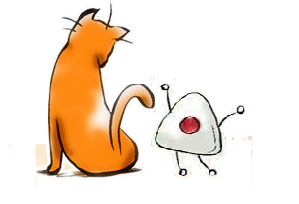
I do not own or take any credit for this drawing - it is an illustration from the artwork of Fruits BasketNow, to direct the reference to a rice ball. This post is inspired by a scene from the anime series Fruits Basket. So much inspiration can come from the simplest of things. Even a japanese rice ball (otherwise known as Onigiri).

It’s not always easy, finding the confidence in knowing there are qualities about you, that others can be inspired, or impressed by. It is especially difficult, when you look at those you know – friends, family, acquaintances, mentors – and can so easily see the things they are good at; the things that draw others to them, or inspire an obvious crowd. Then you try to look at yourself, but all you can see is … ordinary, uninspiring, or someone whose talents are all mediocre.

When you can’t see any of your own good qualities, or you do not think you have any worthy of admiration, it’s easy to feel unremarkable in yourself, and jealous of other people. Or perhaps you look at someone who shares in a similar talent as yourself, but who seems far greater and more capable and admired in their gifts than you. It is easy to make comparisons, when you think that what you have is not worth the time or attention or love of others, since it appears to fall so much shorter than the gifts of the other person. Or perhaps you do think your qualities have potential … but how can they possibly compare to those of such-and-such. “The renown for that quality is already given to someone else … They are so much better at it than I am, it’s clear they deserve all the praise. I suppose that means that what I have isn’t really admirable at all …”

But that sort of thinking is wrong, and simply not true!

I will quote a portion of a conversation in the story, Fruits Basket. The discussion happens a few days after an incident at school where the main character, Tohru Honda, has the realisation that one of the reasons why two of her classmates and close friends, Kyo and Yuki Sohma, are so hateful and embittered towards each other, is because they are jealous of certain qualities they see in each other (something neither of them would admit, even under pain of death, lol) It is Kyo who is in the darkened, moping mood, and Tohru tries to cheer him up by word of encouragement, and upon doing so has her own realisation about ones personal qualities and the qualities of others.

Tohru: Wow, Kyo, that’s amazing! The way you make rice balls, you’re really talented! Incredible, I had no idea!

Kyo: Well, when I was training, I had to make all my own meals and stuff. I just make the plain kind, nothing fancy.

Tohru: Even so, I bet if we found someone who devoted their whole life to the art of rice ball making and asked them, they’d still say they admire the way you do it.

Kyo: Where the hell are you gonna find someone like that?! I mean, come on, that’s gotta be the dumbest thing I’ve ever heard. The art of rice ball making… (walks away into the other room)

Tohru: That still doesn’t change the fact that it’s admirable. Why can’t he see that himself? (Tohru follows Kyo into the other room, walking behind him. Staring at his back she gets a sudden inspiration). Maybe the reason that you don’t see it is because it’s stuck to your back. What I mean is: a person’s admirable qualities. They’re just say, a pickled plum on a rice ball.
So all over the world you could have rice balls made with all sorts of wonderful ingredients, all different flavours and shapes and colours, but since it’s stuck in the middle of everyone’s back, someone could have a plum and not even know it. They’d look at themselves and say, “I’m so plain, nothing but white rice,” even though that isn’t true, because turn them around and sure enough, there it is … there’s the plum.
So if someone is jealous of somebody elses then it’s probably because it’s easier to see the plum on someone elses back than your own. Yep, I can see it, I can see it very clearly. Kyo, you don’t know it but you have a great big plum on your back. Yuki is admirable in his way, and you’re admirable in yours.

Kyo ends up rebuffing her explanation by way of sarcasm, but then quickly realises what she was trying to do for him and he comes back around with a small, coy compliment of his own (saying that she has a plum too “although it’s tiny, like a baby plum” – he’s not the type to know how to express his feelings properly and is very quick to compress any sort of deepness as a means of emotional self-defense).

But, I am sure you all understand the depth of meaning behind the slightly comical illustration. For anyone, and everyone, the struggle is universal. Trying to find and believe in yourself and what you have as unique to offer to the world, whilst fighting to keep from comparing yourself to others and the qualities that they have.

All of us have admirable qualities. All of us have something unique to grow and share. A thousand singers can stand in a row and claim the same talent, but every single one of those had a different perspective, a different tone, a different approach, and a different sound. No one can replace the exactness that is in you. The qualities that you have, as an individual, are rare and special. No two rice balls are exactly the same – and yet they all have flavours and colours and shapes of their own.

Embrace your good qualities. Seek them out. Determine to nurture them. Encourage others in their own. Your world and everyone within its influence will be enriched and enhanced if you do so. You can deny it all you want, or turn a blind eye to the possibility, but when it all comes down to it, it’s true – you’re a rice ball too!

Posted in General | Tagged , , , , , | 1 Comment

The Memory Lost


“Oh what significance are the things you can forget”
– Henry David Thoreu

When I first found my protagonist for the Dragon Calling series, he was without memory. At first, I wasn’t even sure why this was so. I deliberated. Is it an enchantment – if so, how did it happen, and why did it happen to him specifically? Is it an injury of some kind – had he been struck on the head? If so, was it an accident, or was it deliberate? Or did he force himself to forget something, and his need was so intense, his mind shut down and closed off all past recollections? If so, what was it he was trying to forget? Was it something he saw, something he discovered … or something he did?

Some could consider that an obvious trope to use, in order to make it easy the describe to readers things in a fictional world which they would not initially know about, but in a way that would not make the writing too narrative, or separate from what is going on in the plot and moment of the story. If the main character doesn’t remember it, the reader can receive the explanation at the same time as he/ she, and the enlightenment won’t seem forced for either party. Right? In some cases, yes, in others, not necessarily. In a lot of stories, the memory loss plays a key part in the story-line, and is not simply some alternate launch to make things more mysterious.

Some people are quick to dub certain plots and devices as clichéd. But clichés by definition are “stereotyped and trite”, or in other words, boring. A device used to launch particular plots could very well be used often, considered classic to its genre, or perhaps can be easily placed in a specific category – but that does not mean that it will end up being a cliché.

When I discovered my main character (whose substitute name is Laeka’Draeon – pronounced LAIKA DRAI-yon) suffered memory loss, I did consider the possibility it could be dubbed an “oh so traditional” plot device, but to be honest, that is how I found him. I did not shove that disability onto him because I needed to launch a desired plot direction. Actually, I struggled with his impediment. It would have made things so much easier if I could start the first book with the character having a more directional purpose. But that was not the case – and I did not want to change it to my preferences just for the sake of making things easier for myself as a first-time writer.

Some things a writer is meant to alter or shift in order to better the flow of the story and/or the characters, but others are there to be expanded upon; to be the foundation, or a part of the root system. Sometimes, things appear in the story and no matter how you try to work around them, they persist in their defined presence. When that happens, you know it is meant to be, and from there you simply have to take the journey yourself – sometimes right alongside your characters, in equal ignorance – and work out how it ends up fitting in.

Such events or happenings should not be trifled with. They come from somewhere deep inside the stirring of the imagination, and hold a significance and meaning that the wielder (writer) may initially have no idea how to use. When they appear, whether small or great, they should be set into place to begin shifting with the rest of the turning wheels. If no place can be immediately found, they should be set aside in a significant sense, to be used when the right time presents itself (like a difficult-to-place puzzle piece).

For a long time I continued to question the reasons behind Laeka’Draeon’s memory loss. There were many times I thought I had discovered it, only to realise a little further down the story-line that such hypothesis’ could not possibly be the case.

Everything about what he cannot do or cannot remember holds significance. When I truly realised that, I followed the trail distinctly and discovered something quite astonishing; something I actually would not have guessed at all, when I first met him and first wondered over his missing past.

Those of you who do not delve in the art of story-writing may be confused by my descriptions. You may wonder why I write as though I do not know what is going on in my own creation. You may be asking: As the creator, should you not know every little detail about your characters – their motives, their personalities, their hopes and fears?

In some cases, characters can come before their makers and stand there as transparent as glass – revealing everything there is to know about them, past, present and even future. Other times, they are the exact opposite. They look at you with a smile, or scowl or dark, distant eyes and give little to no hint of what it is they are thinking. Or perhaps they do say what they think, and teasingly step back a give you a glimpse of some moments in their past, but then they quickly close off, and leave you to wonder about the rest of what it is that makes them as they are. There are various depths to every character in a story. And the writer does not always get a say when it comes to knowing anything or everything.

At least not to begin with.

Honestly, it is a difficult concept to describe, but once they are born from the mind, characters become their own being. Sometimes you know right away why they act they way they do, or why they dress a certain way, or talk a certain way, or interact with other characters a certain way. Other times, you just know their behaviour and a little of their motives, but you are left to discover the hows, whys and whens, as you progress through the story.

It is fascinating, challenging, wonderous and rewarding. It is a journey within the journey itself.  

As for my protagonist, Laeka’Draeon, I was faced with a very specific and immediate challenge. His memory. I could feel his frustration, his sense of loss and confusion. I wondered what it would be like to wake up somewhere strange, and not remember how I got there, or why. I saw the sickening expression in his eyes when he realised he could not remember who or what he was, and I found myself gladdened that he has such an ingrained determination and curiosity.

Did I give those traits to him? Sure. But he made them his own – and actually used them differently that I originally anticipated. They end up being the catalysts for every action and decision he makes in the first book. They are qualities in him that begin with a significant amount of drive, subconsciously enhanced to compensate for other instincts that were sealed away with his memory.

Both traits are stronger than any hopelessness left by the void in his mind. In fact, his curiosity is an appetite not commonly associated with dragons at all. The reason or this? … well that is something left to be discovered, as are many other things about Laeka’Draeon; some things that even I am still learning about, even after all these years of writing his story.

I shall end this post on a note of what I find is an encouragement for all my characters – and is actually a good encouragement for us all.

“Our dreams must be stronger than our memories. We must be pulled by our dreams, rather than pushed by our memories.”
– Jesse Jackson

Posted in Information | Tagged , , , , , , | Leave a comment

My Inspiration – The Road Less Taken

Interestingly enough, despite my love of the fantastical, mysterious and adventurous, one of my greatest inspirations is a film that focuses not on the content of a whimsical imagination, but on a young artist with just such an imagination.

Whisper of the Heart – an animated film from Studio Ghibli, is shockingly normal in setting, yet so heartfelt and extraordinary in the most wonderful of ways. It is a journey of self-discovery, and a celebration of finding a dream and pursuing it, regardless if it is on the road less taken. It does not solely praise natural talent, but hard work and perseverance. Inclusively it is funny, adorable and romantic, with exceptional detail and quality depicted in the animation style, the musical score, the seasonal changes, the sensations of each environment, and the behaviour and mannerisms of the characters.

I’m pretty sure I’ve been brought of tears every single time I’ve watched it. But it’s easy to see how I can relate so deeply with the film: I am a writer too, and gave gone through a lot of similar motions as the main character in the story.

But I believe everyone, youth or adult, creative or technically minded, would be able to relate to this film. Even if you don’t really appreciate animation, I would implore you to look beyond its presentation style, and see the depth, genuine emotion and charisma it brings to life. If you’ve had passion for anything at all, you’ll be moved … otherwise there must be something wrong with you. Seriously.

One of my favourite quote scenes comes from this movie. I have added it below. You need not have seen Whisper of the Heart to glean the inspiration from this quote. It would strike a chime straight through to the soul of every artist.

Shizuku, the main character, has just pitched her story idea to the grandfather of Seiji, the boy with whom she forms a strong bond.

Mr. Nishi: Wait a minute, I’ve got something to show you (retrieves a rock from his cabinet). I think you’ll like this (hands Shizuku the rock) – take a look.

Shizuku: It looks like a rock.

Mr. Nishi: It’s a special kind of rock called geode. Hold it close to your eye and look inside – that’s right, like that. (Shines small torch beside stone, which lights up the green crystals inside)

Shizuku: (gasps) Look at that!

Mr. Nishi: Those crystals are called beryl. There are pieces of raw emerald still inside.

Shizuku: Aren’t emeralds worth a lot of money?

Mr. Nishi: Sure, but they need to be cut and polished first. When you first become an artist, you are like that rock. You’re in a raw and natural state, with hidden gems inside. You have to dig deep down and find the emeralds tucked away inside you. And that’s just the beginning. Once you have found your gems, you have to polish them. It takes a lot of hard work. Oh, and here’s the tricky part – look at the crack in the geode.

Shizuku: OK (looks inside the top crack)

Mr. Nishi: You see the big green crystal there, you could spend years polishing that, and it wouldn’t be worth much at all. The smaller crystals are much more valuable. And there may even be some deeper inside, which we can’t see, that are even more precious …

Shizuku: What if I look inside myself and I don’t find any gems? What if I’m just a rock? I’m going to try anyway! I’m going to write that story and I’ll let you be the first to read it!

I guess what I really wanted to emphasize with this post is that we should all strive to make our dreams a reality. Each of us has a desire to be or do something in particular, and although we may not know if we’ll end up being any good at it, it’s important to try. It’s important to believe in yourself and to keep working at whatever it is you are passionate about. The only way you will bring worth to your gems, is if you continue to cut and polish them.

To all you writers, singers, musicians, painters, illustrators and animators out there … keep pursuing your inspirations – and take that road less travelled!

Posted in General | Tagged , , , , | 4 Comments

Don’t say it’s a Dog, and then write “Meow”

I have recently been going through my second book and making sure that all of the descriptions match the passage of time correctly. The reason for this is because a while ago I added a few extra days to the timeline of the first book. So – if it is changed earlier on, everything else that follows must line up to correctly match. Otherwise there will be issues.

As the title states, don’t say that it’s a dog, and then get it to meow whenever it speaks. And although that really has nothing to do with timelines and the passage of days and nights, I think everyone can get the idea of what I’m saying.

I think it’s important to make sure the passage of time is lined up correctly, especially if you are describing the scenery or particular elements of that day (or night).

Say an event happens during the moon’s first quarter (you’ve described the particular month, or day of the week, or perhaps even moon itself). The picture painted is clear – the readers are now aware that the moon is at its first quarter. But then, a week later, another significant scene takes place at night, and you go and throw in the fact that the sky is pitch black, void of the moon’s light because it is new.

Erm … problem there, right? A huge chunk of time just vanished into some incomprehensible vortex. Some readers may not notice the missing span of time – being too caught up in the actions of the scene to really consider such a detail. Others, however, may notice it almost instantly, and thus be thrown out of the book’s reality, and into a limbo of confusion. The sense of realism is suddenly lost, and that part of the story loses its believability.

If you fail to accurately keep track of time from one event to another, you can really mess things up and throw the reader out of their previous immersion in the story.

So, to make sure such a thing is not an issue in my story, I actually have a calendar of the months (fulons) of a Valadilian year. By putting notes in the days that certain events occur, I am able to keep track of when things are happening, or going to happen, and thus I can put in an accurate description if I was to mention the time of day, the shape of the moon, or even the weather. 

It’s a simple and very effective method – especially if your story is one that occurs over a vast distance, or an extended length of time.

Of course, depending on where your story takes place, it is important to stick to the “rules of that world”. As far as my story is concerned, there are only 28 nights in every month, and there are thirteen months in a year. The hours also differ from this world. We have 24 hours in a day – Valadae has 30. If your story takes place elsewhere from Earth (or a parallel Earth), then you have the freedom to extend or diminish the cycle of time however you wish. Or you may want to keep things simple and so stick to the cycle of time everyone is used to. The choice is up to you. But keep in mind, whatever you choose, you need to stick to those rules of time passage, and make sure the descriptions of the events of your story coincide with the right day, night, month and season.

Remember, don’t say it’s a dog and then write “meow”. I think that rule applies to all areas of story-telling.

Posted in Information | Tagged , , | Leave a comment