“No one is born a writer. You must become a writer. In fact, you never cease becoming, because you never stop learning how to write. Even now, I am becoming a writer. And so are you.”
– Joe Bunting
Writers are a wondrous lot. Like trees, we grow, as is the nature of all others of our kind, unique in our progresses, absorbing the incursion of toxins and provision of nutrients sluiced upon us by the world, by our existence and our experiences, and sending out in return the oxygen of our inspirations; and year after year, the proof of our endeavours can be found in the dendrochronology of our growth rings, our written stories, permentant and enduring.
Again, like trees, the amalgamation of our upbringing, environment, and individuality brings about foliage, flowering, and fruiting, all in times and forms unique to us; how we begin and how we work through our stories and writing processes, unique to each of us.
That being said (and me getting those purple prose tree similies and metaphors out of my system, haha), I thought I’d share a little of how I think and work as a writer. These queries are drawn straight from the knowledgable, salt-of-the-earth John Fox of the Bookfox writer’s help channel.
One of his videos, the 9 Craft Questions Every Writer Should be able to Answer, got me thinking about some aspects of my views and persuasions, as a fiction writer. What he puts forth encourages writers to ponder their medium of creativity insightfully. I encourage fellow writers to check it out and consider what their own answers to the nine questions might (primarily) be.
Here are mine.
Should Language Be Trance Or Entertainment?
(Trance = Invisible writing, Entertainment = Evocative writing aka “artistic”)
I write my language as Entertainment, wanting to offer up the richness and variety of the English language for the reader to discover, learn, and enjoy. I suspect I do this because for many years (growing up) I was selective in my reading, and didn’t enjoy it as much as I enjoyed visual stories like movies, comics or my daydreams. When exposed to more interesting, colourful and eloquent words and styles, I was drawn like a moth to flames. I love how expressive and varied the English language is; how wonderfully mosaic, complex, multifarious and poetic it can be. Both Trance and Entertainment have their place, and I enjoy reading both forms. But I’m an Entertainment writer through to my bones.
NOTE: I have seen these two styles described in reverse. As in, Trance is the more immersive, evocative writing, the more “artistic”, while Entertainment is designed to more easily engage the reader with dynamic plots and accessible (“invisible”) language. BUT, for this post, we’re going with Fox’s version.
What Can Writing Do That Films Can’t?
The things touched on in John Fox’s video:
Interiority—Books can allow you to become more intimate with the characters; to get into their mind and explore the interior world of their thoughts.
This is definitely something I utilise and I suppose one of the primary reasons I write stories in “novel form” (as opposed to screenplays) is getting in close to my characters, teasing out their feelings and emotions, and at times, their direct thoughts. It’s the satisfaction of experiencing that level of immersion, that ‘stepping into someone else’s shoes’ that draws me to stories in book form.
Time—Novels are better at speeding up through scenes or slowing down scenes; controlling the shift in tempo; skipping over boring parts, but still giving the notion of things happening.
Movies can do montages depicting time skips and such, but books definitely have the advantage, with much more flexibility to skip between events. I’ve utilised summarisations and time-skips in my stories. Transitional things like “Two days into their trek …” and “The following morning …”. It’s proved especially helpful when a character needs to summarise an account of something that happened (or of their so-far adventures) to a new character or third party; instead of having to actually write the re-cap, all I’ve had to do is say something along the lines of ‘they explained everything up until now’. Done.
POV Variation—you can get into the thoughts and feelings of different characters in a much deeper way with books.
Nearly all of my writing is done in the Third-Person Limited POV with splashes of Third-Person Subjective; allowing for closer intimacy with the main character (or POV characters). It’s not as intimate as First-Person, sure, but it’s not as restrictive either. It’s the sweet spot in story-telling, at least for me (as a writer).
Of course, POV is subjective for every writer; and it’s because of the availability of differing POV types, that fiction writers have an edge over the ‘movie camera’ when it comes to really getting down into the inner lives of characters. Fellow writers, what POV do you primarily use in your stories?
What Should the Writer Never Show?
Where does one draw the line as far as mature content or themes?
Again, subjective depending on genre, audience, and what type of experience the writer wishes to offer and what themes they’re wanting to convey. I think this is an important question for every writer to seriously consider.
For me, I will never cross the line into descriptive sexual violence, or strong coarse language, or writing the torture of innocence like children and animals. I am also not inclined to add vulgarity into my stories.
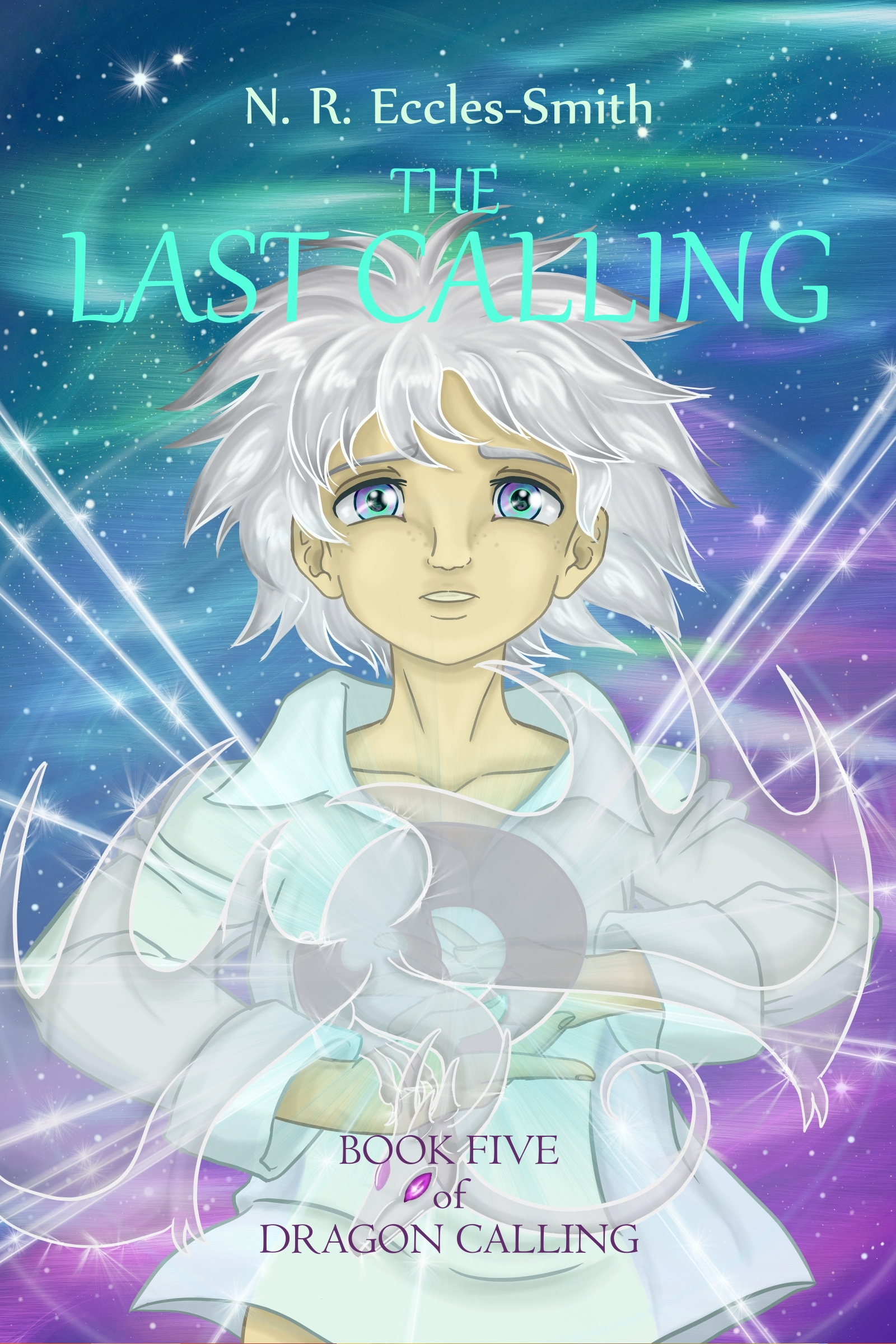
My main fantasy series, Dragon Calling, is primarily Noble Bright. And while it does touch on some heavier themes and content, such as revenge, war, slavery, monsters, evil magic, and dark spirits, it does not do so in a gratuitously graphic or grim way. One of the books even has a torture scene—an awful but important play out of character interactions. And not gratuitous. But I suppose that, too, is subjective.
What I don’t shy away from is the scary or the uncanny or (fantasy) violence. But my audience is primarily Upper MG and YA (for my fantasy series at least), so my content is measured in that arena. My current WIP is New Adult, but I am still measuring its content to my personal standards. Nothing vile. Nothing gratuitous. But mysterious? Unsettling? Shocking? Eerie? Yes indeed, for strong atmosphere and unease play an important role in the story’s genre (slow-burn supernatural mystery with gothic horror elements). 😉
Should You Always Try to Write “Round” Characters?
(Round = fleshed out and multi-dimensional characters, Flat = one dimensional)
I think the main cast in a story should be round (some more than others). But side and support characters are fine to be more flat (even characters that play an important role in the story). Honestly, sometimes, as a writer, you just don’t have the space or the story-direction to offer all characters a more rounded showcasing. That, and some characters don’t even need it. Genre also plays a role in the ratio of round vs flat characters. This is a good question for writers to consider in order to get the most effective energy from your characters.
NOTE: I worked out that the main cast of characters from my fantasy series are nearly all rounded. It makes sense, since multiple books allow me to expand upon their individual arcs. But my current WIP is a stand-alone novel, and I’ve learned from doing a deeper assessment, that some of them would be considered flat. That’s not a bad thing, by the way; I believe they serve the story well just as they are.
Is the Novel Essentially Moral or Amoral?
Subjective for every writer (as most writing facets are). But, I am in line with the principles of John Gardner (his book On Moral Fiction), in that the novel has a responsibility to convey moral principles. Stories should have a moral compass, but not in that preachy ‘finger-wagging’ sense.
I believe I will always write stories that have a moral compass, to varying degrees (Aka the virtues of doing what is right, of courage, of kindness, of self-sacrifice, of the rewards and influence of goodness; weighed against the pitfalls of selfishness, and repercussions of moral bankruptcy and the bitter harvest of actions fuelled by unforgiveness or depravity).
Should You Include Coincidences In Your Fiction?
If implemented so that the coincidence doesn’t feel lazy or hackneyed, then I think it’s fine to use coincidences. They happen in real life; serendipitous encounters, strings of bad luck, karma, etc. And God’s hand moves in situations behind-the-scenes all the time. That being said, it’s better (less risky) to have coincidences at the beginning of the story, as opposed to near the end, where they might be perceived as “cheats”. Coincidences should create problems, not solve them.
I’m pretty sure I’ve used (what would be considered as) coincidences before. Things like characters crossing paths at just the right time, or encountering a threat at a most inopportune moment. But most of my “possible coincidences” are either quickly hinted at or later revealed to be something more deliberate.
Also, I like the idea of writing something that, at first, looks like a coincidence, only to later reveal that—a-ha!—it actually wasn’t! Not sure if I’ve ever effectively pulled it off though.
It also depends on the type of story you’re wanting to tell. And the genre. Coincidences, I feel, can work better (as in, not come across as trite) in fairytales, fantasy, romance and comedy, but not so much in stories with higher-stakes, intricate puzzle-like plots or strong in-world laws, like thrillers, dramas, and mysteries. Just my opinion, though. What are your thoughts, fellow fiction writers? Do you find yourself using (intentional or otherwise) coincidences?
What is a Better Narrative Technique: Anticipation or Surprise?
Depends. Surprise gives you the ‘twist’ and ‘shock’ values. But sometimes anticipation works better; you tell the reader something that is or that will happen, and you’ve created a hook; you’ve wet their appetite for the hows and whens, so they will read on with expectation. I don’t think one or the other is better. They both work, and will work well if placed in the right parts of your story.
Some questions we writers can ask ourselves:
Which one do I habitually use more often?
Can I use more of the other one?
How can I incorporate both of these techniques into my fiction?
Ultimately, the trick is to work out when to use one and when to use the other based on the storyline …
For me, I think it might use anticipation more, but in the subtler sense through foreshadowings or the posing of specific questions (made by the MC or an important character). The best of both would be “a juicy surprise that is built on the paver stones of anticipation”.
Should You Use Brand Names in Your Fiction?
This can date your work, depending on the types of brands stated (e.g. pop culture references or technology), so be careful. BUT, if you intend to hint at or highlight the specific era or your story, brand names will help with that. Brand names also help to make things more realistic and authentic.
Most of my stories are based in fictional worlds, so I’ve never really had to worry about whether or not to use brand names. But my current WIP is based in the real world and an earlier decade (although the setting is fictional) and so far I have used some brand names with careful intentionality. I don’t mention the year the story is set in, but I do write with it in mind (doing research into the decade’s technology, the fashion trends, the lingo etc).
Should You Create Themes in Your Work?
Your story will always have themes, but the question is, should you create them to fit into your story?
I say … no. For me at least. Picking out themes to begin with is tricky for me. I am not going to deliberately try and push themes in, or try and work a story around a specific theme. For me, I want the story and its themes to unfold organically. For example, my fantasy series started with a single character (a young dragon with amnesia) and a basic story idea (the rest of the dragons have mysteriously gone missing, and he is compelled to find them).
There you go. My thoughts on the questions posed by John Fox. They are subjective in the ways all writing advice and suggestions usually are, but still insightful things to consider and work out for yourself. And, of course, it stands to reason that your answers to these may very well differ from writing project to writing project, depending on what you’re writing (audience and genre) and what you’re trying to convey.
So, what type of writer am I? As far as the aforementioned questions, here’s the summary:
I prefer to write Entertainment language (the evocative “artistic” style).
A picture may be worth a thousand words, but when those words reverberate through the reader’s soul into their own imaginings, the value of those words transcends into a uniquely individual experience.
No-go zones are sexual violence, explicit scenes, strong coarse language and the torture of kids and animals. Insinuation is more than enough.
Main cast of characters should always have a degree of roundness. Support and secondary characters are often fine being flatter (depending on their place and influence within the story).
My stories will always lean toward the moral.
Coincidences are fine if they cause problems for the characters (not too many though otherwise it’s frustrating), or they are “set up” as coincidences only later to be revealed as intentional or by design.
I enjoy anticipation which leads to an unexpected (but in hindsight an “a-ha!”) surprise. Anticipation built upon foreshadowing makes for excellent story fodder. Some surprise woven in (hopefully) makes the reader realise they may not be able to predict everything that is hinted at through the anticipation.
I often don’t use brand names since most of my stories are based in fictional worlds. The only reason I use brand names in my current WIP is to emphasise the status of certain characters.
I don’t create themes for my stories. In fact, I don’t focus on themes at all (to begin with) and find the themes emerge organically as the story unfolds.
How about you, fellow fiction writers? What type of writer are you, as far as your approach to these questions?
















 Whims from Valadae