Riddle Me This!

Werecat Playful Pose

Greetings mortal readers and virtual wanderers of the blog realms! I, the Whimsical Werecat, have returned to grace you all with my marvellously fascinating presence and memorable, mesmerizing musings.

And what better way to mesmerize you all, than with a few gems from the traditionally favourite werecat pursuit of solving cleverly conceived lyrical enigmas.

That’s right, I am speaking of riddles!

Those culturally rigid cousins of ours, the sphinx, are not the only ones who enjoy the mental churnings a quality riddle evokes! And aside from the occasional catalyst in a friendly wager or two, we werecats indulge in riddles for no other reason beyond harmless entertainment (unlike another riddle-lover we all know).

If Baggins loses we eats it whole!

If Baggins loses we eats it whole!

So, how clever do you mortals consider yourselves? Does your brain scramble at the very mention of a brainteaser? Or do the silver threads within your mind quicken excitedly when presented with a vernacular conundrum? Either way, why not put your cleverness to the test?

I have chosen a few of the more traditional riddles for you to attempt. Some you may know already, some you may not. Familiarity is irrelevant in any case. What is relevant is that you do your utmost to use the cleverness of your own mind without resorting to the atrociously dull act of cheating. Nevertheless, if you fail to guess correctly, or cannot withstand the temptation to cheat, you need not fear being devoured. This is, after all, merely an innocent diversion.

So go ahead little mortals, test your skills! See how many of these riddles you can solve with your cleverness. The answers are typed backwards at the bottom of this post so you can check your correctness once you have given each riddle a thorough pondering.

Riddle me this!

1)
If you break me, I do not stop working,
If you touch me, I may be snared,
If you lose me, nothing will matter.

2)
Three lives have I.
Gentle enough to soothe the skin.
Light enough to caress the sky.
Hard enough to crack rocks.

3)
In marble halls as white as milk,
Lined with a as soft as silk,
Within a fountain crystal-clear,
A golden apple doth appear.
No doors there are to this stronghold,
Yet thieves break in and steal the gold.

4)
I am always hungry,
I must always be fed.
The finger I lick
Will soon turn red.

5)
Halo of water, tongue of wood.
Skin of stone, long I’ve stood.
My fingers short reach to the sky.
Inside my heart men live and die.

6)
Dies half its life,
Lives the rest.
Dances without music.
Breathes without breath.

7)
You must keep this thing,
Its loss will affect your brothers.
For once yours is lost,
It will soon be lost by others.

8)
White bird, featherless,
Flying out of paradise,
Flying over sea and land,
Dying in my hand.

9)
It comes only before,
It comes only after,
Rises only in darkness,
But rises only in light.
It is always the same,
But is yet always different.

10)
Black we are and much admired,
Men seek us if they are tired.
We tire the horse, comfort man.
Guess this riddle if you can.

And that concludes my memorable musings for now. I hope my offerings have proven somewhat amusing for your wondering, wanderings minds. Perhaps, if I am feeling inclined the next time I am on the prowl in this vicinity, I shall share some of my own riddles with you (for the ones listed above came from other creative minds).

So until next time, always keep your curiosity and courage at hand adventurers!

1) traeh 2) retaw 3) gge 4) erif 5) eltsac 6) eert 7) repmet 8) wons 9) noom 10) laoc

Posted in Werecat Whims | Tagged , , , , , , , , , , | Leave a comment

The Power of L.O.V.E

With Valentine’s Day closing in, there’s a strong sense of love and friendship in the air; or at least, there should be!

With the way our society is today, there’s usually a lot more superficiality, and a lot less sincerity. But setting aside the cheap, over-commercialised way our culture has painted love, we should all take some time to sit back and really reflect on not just the word, but the true meaning of what it represents.

Love is not simply a feeling, or a perspective, it is life in action. It is a multidimensional, multifaceted energy. And, at the crux of its actuality, the most powerful force there is (all clichés set aside). Love is not weakness. It is strength. Do not make the mistake of thinking love is defective. The defects lie in our own insecurities, doubts, selfishness and fears. True love never fails. Sound fanciful and naïve? Well, that depends on your own experiences of course, but also how you are looking at it. As I said, there are different facets of love to consider.

A good way to view the different levels of love would be to look at the four expressions of it in the Ancient Greek interpretations: Philia, Storge, Eros and Agape.

Philia – The friendship love. It is the kind of love expressed in loyalty between friends and family and close community. It entails virtue, equality and familiarity.

Storge – The affection love. It is the kind of natural love expressed within family units; between parents and offspring, siblings and cousins, grandparents and grandchildren.

Eros – The passionate love. This is the expression of sensual desire and attraction. Although used to describe love of a physical nature, it can also be an expression of affection that is more intimate than Philia; a more platonic love.

Agape – The unconditional love. This is the unfailing love. The sacrificial love. The love one has for one’s children, or one’s spouse; the kind of love that is given unreservedly, gracefully, without conditions and without exclusions. It is also the expression of pure contentment, or high regard. This is the kind of love you give, regardless of what you get in return.

So, while you ponder on the wondrous, mysterious, life-changing marvel that is love, perhaps you can think of different ways you can express the various kinds of love this month to those within your circles of influence; to your colleagues, your classmates, your teachers, your family members, your friends, and even to strangers who cross your path.

Letter L from Zazzle
Live openly and generously.
People will never get the best from you if you are stingy or reserved, and you will never get the best from yourself, which will only result in regrets. We don’t have stories like Charles Dickens’ A Christmas Carol simply as a passing muse. Learn from the wisdom of others and live to expand your life, not contract it.

Letter O from Zazzle
Offer your time and talents freely.
We work and strive in order to receive something in return for our efforts. Of course. Let’s face it, we can’t pay the bills with charity. But there are also opportunities to extend yourself without expecting returned favours or rewards. Make the effort to do because you can, not because you have to.

Letter V from Zazzle
Value the feelings and opinions of others.
Even if you disagree with them, at least be sensible about it.
Don’t hate for hating’s sake, or spite because everyone else around you is being spiteful.
There’s already too much nonsense and stupidity in the world. Don’t diminish yourself by adding to it.

 Letter E from Zazzle
Encourage and inspire those around you.
Surround yourself with laughter, fun, hope and possibility. If everyone just laughed a little more, worried a little less, and cared enough about things to do something useful, the world would definitely be a better place!

Let’s share the love this wonderful February of 2013. Let’s not wait for a thought or a feeling. Act now, and marvel at the thoughts and feelings that result of those actions. Goodness begets goodness, my fellow readers. Try it and see!

Posted in General | Tagged , , , , , , , , , , , , , , | Leave a comment

Enter 2013 – Year of the Water Snake!

Well, here we all are, with 2013 rolling across the present timeline of our lives. And a very big welcome to this new year – the Year of the Snake (or to be more precise, year of the Black Water Snake, according to the Chinese Five Element Astrology Calendar)!

For some, the transition from one year to the next is nothing to make any sort of fuss over. For others it may be just an inconvenient or generally inconsequential bump in their carefully plotted schedules. But still for others, this time marks a very significant and special point.

Generally, this turn-over of our calendar signifies a time of things ending, and a chance for new things to begin; a time of reflection, and a time of renewing; a chance to challenge ourselves to do something different, to be somebody better, or perhaps stay the course we began the previous year – knowing that continuing that path into this new year will bring about even greater results.

If 2012 was not such a great year for you, now is the time to turn the page over and begin anew. Don’t carry old prejudices, regrets or unforgiveness from months past into this new time. Doing so will only cast 2013 with the same shadow that haunted 2012. I know letting go of some things or breaking off bad habits is never easy. If it was, we’d all be fit, healthy, happy, and possibly quite rich. But if ever there was a time to take a deep breath and turn and face your fears or woes in order to stand against them and overcome, now is the time to do it! Right here, at the beginning of 2013. The start of new things. The start of something better.

But it’ll be up to you, and what you choose to do, that will shape the days and months to come. Wishing for something is a good start, but it doesn’t get you any further than that unless you decide to step out and take action. So let us all start doing more this year, and not merely hoping or wishing for it. Let us make 2013 a year the best we’ve had so far!

And here are a few tips from our wonderful fictional inspirations on how you can help yourself achieve that best-ness!

Long-suffering – Be hospitable and patient with people, even if you feel like you shouldn’t have to in that situation (or they don’t deserve it). Others will always remember how you react in unexpected circumstances.

Bilbo Baggins the Unexpected Host

Good Advice – Listen to it, even if at the time you don’t find it helpful or relevant.

Navi the Fairy

Humility – Use your talents and gifts for the benefit of others, and not for your own glory. You will find a much greater satisfaction.

Merlin - From BBC Series

Be Yourself – Do what you know you are meant to do, and be who you are meant to be. You never know how many people benefit or rely on you being true to yourself.

Disney's Wreck-it-Ralph


So, make the most of every moment, fellow writers, readers, bloggers and browsers. And may 2013 be your year of many unexpected, but rewarding, adventures!

Posted in General | Tagged , , , , , , , , , , , , | Leave a comment

The Twelve Whims of Christmas

Werecat Cushy Pose

Greetings mortal adventurers! The Whimsical Werecat has returned – at the most opportune of times I might add – to awaken and inspire within your soulful natures some random acts of kindness. After all, is this not the time of year for your seasonal celebration of giving, cheerfulness, togetherness and support?

Well then, I have the perfect compilation of memorable mesmerising musings for this most merry occasion!

It is time to inspire you with some ideas on how to show kindness to all your fellow creative creatures out there. If you have companions or kin who are artistic, musical or literary in their expressions toward life, then by all means take the time to complete the list I have plotted out for you below.

It is time for the TWELVE WHIMS OF CHRISTMAS!

The First Whim of Christmas – Do in Deed, not just Word

Kindle Logo

Do you have a friend or family member who has a book published? If you haven’t already read it, why not do so – even if it’s a genre you normally don’t pick up. Adding that single number to the list of purchased copies may not seem a big deal to you, but it is to the writer! The act of buying a copy of their work (whether paperback, e-book or hardcover), will mean more to them than any declarations of “well done” or “I hope your book does well”.

The Second Whim of Christmas – A Little Boost of Youtube

Youtube Logo

Do you know someone who is starting out in their musical career, or is on the road to following their dreams of putting out an album? If they have any of their songs up on Youtube, take the time to listen to them and leave positive comments, or maybe even “Favourite” or “Like” some of the ones that leave a memorable ring in your ear. Even if their style of music is something you might not normally listen to, you can still show your support. Every click and comment counts!

The Third Whim of Christmas – The Goodness of Goodreads

Goodreads Logo

Read any books recently that you enjoyed? Or even if it wasn’t so recent (but you still enjoyed the book), why not jump on over to Goodreads and give the book a positive rating! Taking just a few extra minutes to put your opinion up for others to see will boost the books standing, and in turn be a positive power toward the writer.

The Fourth Whim of Christmas – A Blog of Choice

Blogger Logo

If you enjoy reading the antics, inspirations and adventures from those with a talent for prose, why not take the time to look around and stop by a blog site of interest and “follow” them. If there are articles or particular topics that you like – leave a comment! You’ll not only boost the blogger’s traffic, but you’ll boost their spirits, too!

The Fifth Whim of Christmas – A Friend in Facebook

Facebook Logo

There are thousands of artists, musicians and writers that have their own Facebook page designated to show off their work. Why not take the time to look around and find some that you like, and go ahead and “LIKE” them! You never know where such whimsical acts of kindness may lead you, but it is sure to result in something good.

The Fifth Whim of Christmas – Pinterest some Interest

Pinterest Logo

Know any artists or photographers who have their work up on the internet? Pin it on Pinterest and share it around so that others can enjoy and discover some great new talent! Don’t forget to mention who the artist is, and maybe even sneak in a link to their website or gallery!

The Sixth Whim of Christmas – Momentum for the Muso

iTunes Logo

There are so many artists out there competing for attention in the music industry, even if just for their own small, dedicated following. If you have a friend or family member who is working toward getting their first album out there, don’t hesitate to support them! Buy the album as soon as it’s available, and if it’s something you really enjoy, share it around with others so that they may enjoy it, too (and maybe even buy a copy of their own!).

The Seventh Whim of Christmas – Do in Word, as well as Deed

Word of Mouth Icon

Read a book you liked? Tell others about it! Found an amazing work of art online? Tell everyone you know where they can find the artists gallery, so that they can check out the awesomeness for themselves. Listened to a great tune from a lesser known muso? Share your interest and enthusiasm with friends, family and co-workers. Even if they may not like that style of music, they may know someone else who does! Word of mouth is a powerful tool in the creative industry, so why not use it to help a fellow creative creature?

The Eight Whim of Christmas – Sound from the Cloud

Soundcloud Logo

Perhaps you are following a favourite artist, band or podcaster on Facebook, and their website and Twitter, but why not add to that list by “Following” or “Liking” some of their work on Soundcloud! Remember, every little click counts!

The Ninth Whim of Christmas – Looking Out for Those Behind

Nuthatch-fledgling - copyright birdingmaine 2009

All creative creatures started off at square one. Perhaps you are one such creature, and have spent countless hours of research and making connections and bending to the learning curves (oftentimes sometimes crashing down in a heap). But now you are well on your way, and are reaping the rewards of all your strenuous efforts. Well, there are many more fledglings trailing along behind you who could really benefit from your knowledge and experience! Why not find a site (like AQC) where those fledglings gather, and instil them with words of wisdom or encouragement. Wouldn’t it be great if something you said or posted helped other fellow creators to avoid all the mistakes that you made during your journey?

The Tenth Whim of Christmas – Time for A-Twittering

Twitter Logo

Let’s not forget the power of Twitter! If you have and acquaintances, friends, or friends of friends who are a creative creature with their own Twitter account, by all means follow them! Tweeting around enough will be sure to get others interested, and from that your support can create a whole addition to their following.

The Eleventh Whim of Christmas – Supporting the Capturers of Memories

Camera Photo - taken from Coolaz website

Do you know someone who has started their own photography business? If they do professional photo shoots, why not get some done through them! Or if you know of anyone who is in need of a photographer for a particular occasion, why not recommend your friend to them? Never underestimate what your individual support can achieve!

The Twelfth Whim of Christmas – Beyond the Creative Creatures

ark'd Culture

And while we are all in this spirit of giving and stepping out to support and benefit others, let’s not merely limit ourselves to the creative creatures within our circles of influence. Why not take a page from these fine people from ARK’D and perform any act of random kindness to anyone we come across! You may be surprised at much you get in return, by giving freely of yourself.

And there you have it, oh mortal readers, my Twelve Whims of Christmas. So go ahead, pick one or two or even ten Whims to accomplish over the Christmas season! Share the love, spread the word of great talent, and support those who help add colour and vivacity to our wild and whimsical world.

Until next time, keep your courage and curiosity at hand!

Posted in Werecat Whims | Tagged , , , , , , , , , , , , , , , , , , | Leave a comment

Music – The Soul of Visual Storytelling

Music.

It is, without a doubt, one of the most powerful and influential creative forces in the world. Music can move people to bloodshed, or move them to tears; brighten the darkest mood in a room, or bring the stillest calm to a soul. Music can make or break an atmosphere. It can also make or break a story.

If implemented poorly or inappropriately, music can be the bane of a great story adaption (whether on the silver screen, through a televised series, or as an audio book).

A good example of this is the 1985 fantasy movie Ladyhawke.

The story is a wonderful one, filled with adventure, humour, magic, and above all, a tragic but unbreakable love between two of the story’s protagonists. And then … there’s the music. At times, there’s a nice orchestral influence, but then along comes an awful jarring of the early 80’s keyboard and guitar – invading the marvellously captured cinematic scenes like a swarm of synth-armed cicadas. To put it plainly, the music for the most part was entirely inappropriate for the genre of the movie, and ended up being an annoying distraction.

Did the music ruin the movie? In my opinion, not quite, but it certainly stripped an amazing classic fantasy tale of its right to shine with a golden glow. I enjoyed the movie too much to cast it aside, but there is no mistaking that a part of it is forever tainted by the poor choice and execution of the musical score (although remember, this is just my personal opinion, and I have no qualms with those who feel differently).

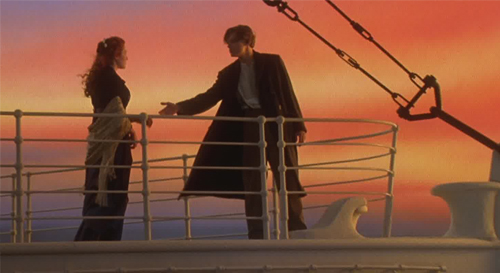
Now, a good example of how music can transform a movie from a visual inspiration, to a visual inspiration of deeply empowered emotion and soul, is James Horner’s score for Titanic.

Watching, captivated, we were taken on a journey of love and tragedy, but oh how much more enriched and connected we became when the music filled our ears and swept us away; immersing us into a strange, surreal vividness of every emotion the story embodied.

But tragedy or longing are not the only emotions music has the power to bring to life. Just listen to the musical scores of movies like Inception, Dark Knight Rises, Jaws, The Lord of the Rings, Pride and Prejudice, Gladiator, 3:10 to Yuma, or Black Hawke Down and the pallet of all your emotions will be touched and stirred.

There is little doubt over the importance music has over the connection between a story and its audience, but that source of creative invigoration and soulful inspiring is not limited to movies.

Those who allow themselves the pleasure of immersing into video games know that the musical scores are treated with an equal amount of passion and involvement – particularly in certain genres. And, just as with movies, the musical score in a game can make or break its atmospheric presence. If done fittingly to the game’s style, and done well, the music can become the wind beneath its wings, and take the gaming experience to a whole new and essentially unforgettable level.

A prominent example of incredible musical achievement in a game, are the scores for the Mass Effect Trilogy; arguably one of the most celebrated and critically acclaimed gaming experiences of its calibre.

There is so much more that could be said about music and its integral part as the soul of visual/ audio story-telling, but I shall leave you with a link to one of the musical scores from Mass Effect 3, performed by the highly talented London Philharmonic Orchestra. So listen, and enjoy!

MUSICAL SCORE FROM MASS EFFECT 3

Posted in General | Tagged , , , , , , , , , , , , | Leave a comment

Those That Inspire Us

“Example has more followers than reason. We unconsciously imitate what pleases us, and approximate to the characters we most admire.”Christian Nestell Bovee

We all love a good story. And by good, I don’t simply mean popular, or timeless, or happy-ending-guaranteed, or because it was created by our favourite writer/ producer. Sure, what each of us classifies as a ‘good’ story may have one or more (and possibly all) of the above, but I think what makes a good story, is not what entertains us the most … but what inspires us the most.

And the greatest of inspirations always have, and always will, come from the characters.

But what, exactly, makes a fictional character inspiring? Really, though, the better question to ask would be, what is it about a character that inspires you? Every person relates to a story and its characters differently.

When reading a book, or watching a movie/ series (or even playing a game), our own personalities and personal experiences come into context and alter the point of view we have of the characters coming to life before us. One character’s behaviour may frustrate some people to no end; others may be highly entertained by their attitudes and actions; while still others may feel a mutual connection and end up being inspired by that particular character’s journey through the story (even if it’s not a main character).

The inspiration a reader/ viewer experiences may come from just one particular quality a character portrays … but in a lot of cases, there are multiple ones that end up stirring within us emotions, contemplations, and even revelations.

All characters have faults and virtues. Some people find inspiration from the virtuous traits, others from the flaws, and the reasons why vary to quite an extent. One reader could be inspired by a Hero’s fearlessness and trust is his own ability (perhaps because they strive to be more like that in their own lives), while another reader may find an equal amount of inspiration from that same Hero’s struggle with anger or guilt from a past event/ upbringing/ betrayal/ or whatever (perhaps because, for them, anger and guilt issues have been a personal struggle too).


Captain Nathan Algren is a good example of this type of character.

Usually, though, we end up finding inspiration from both sides. Sometimes, it’s about the endurance of a character’s honourable nature; other times it’s a character’s already fallen standing followed by the journey they take that transforms a part of them for the better. Sometimes we even find inspiration from a do-everything-right type of character learning that doing what they would normally consider ‘wrong’ is sometimes necessary for the greater good. The opposite holds true, too; a do-whatever-they-like type of character learning that stepping outside of themselves, even to their own detriment, comes with its own reward.

The humanity reflected through these fictional characters is what draws us to them. Every created character in a story has a value that should not be (ignorantly) undermined or (immaturely) ridiculed. They are who they are because that is how they are meant to be. Some readers/ viewers may loathe the qualities of a certain character, but for others, that character is an inspiration; a reminder of whom they once were, or from what they’ve come from, or perhaps what they’re still working through or dealing with.

Inspirations come from many different places in the spectrum of fictional characters, and from many different perspectives. As audiences to the stories these individuals undertake, we need to remind ourselves of what makes them inspiring (or abhorrent) not only to us, but also to others. And to learn to appreciate a character for what they are (that, of course, doesn’t mean you have to like them if you already don’t – but you can learn to appreciate them).


Like this guy! (one of my personal un-favourites) :/

Ask yourself what draws you to your favourite fictional characters? What qualities about them inspire you? If you really don’t like a particular character from a story, why not take a moment to work out why. And perhaps even challenge yourself into working out what inspiring qualities others see in characters that you don’t particular like.

It probably won’t take you long to discover that the way we view different fictional characters, is actually a pretty accurate way we look at other people in real life. And there’s not necessarily anything wrong with that. Difference is what makes the world a more interesting place! And that’s a law that governs both fantasy and reality.

So, why don’t you make a list sometime of your favourite stories, and then pick out your favourite characters from them and write down what you find inspiring about them! You may actually be surprised, or even enlightened, by the results – especially if you take the time to work out why.

“We have created characters and animated them in the dimension of depth, revealing through them to our perturbed world that the things we have in common far outnumber and outweigh those that divide us.”
– Walt Disney

Posted in General | Tagged , , , , , , , | Leave a comment

A Writer’s Guide to Creature Depiction

Greetings, oh mortal readers of the virtual blogging realm! I, the Whimsical Werecat, am once again returning here to embellish this marvellous little site with more of my memorable mesmerising musings.

The topic I wish to enlighten you with today is something any avid writer – from the eager greenhorn, to the relatively well-learned story-teller – should add to their field of knowledge. And that topic is: writing for the non-human/ animal element of your story.

For those of you who have animals (or any considerably non-human being) as an important component in your story, it is extremely important that you bring accurate descriptions and behaviours into the prose. If you have animals as primary characters – all the more so!

Like any other part of accurate portrayal throughout a story, bringing realistic flourishes to the description of animals, and other creatures apart from humans, is integral to the overall merit of a book. Trust me, as a werecat I am all too aware of the importance of non-human creature exposé (you humans need to get this right!). Even if animals are just an addition to the background or world-building part of your written works, you should really think about making sure your descriptions still reflect directly from the real thing, otherwise you risk those elements becoming two-dimensional or flat. If you are not careful, you could even unintentionally taint your tale with a sense of falseness.

As an example of working on animal descriptions, if you have horses in your story (your main characters use them as a primary source of travel, or there is a great medieval battle, and a portion of the fighting is executed on horseback), you must make sure that the beasts you describe actually sound and behave like horses. An extraordinary revelation, I know. But truly, any writer striving for excellence must get this right. Accumulate all the facts about horses you can before you begin writing about them (if you handle horses in real life, you are already at a great advantage). Horses are herd animals; they are instinctually flighty; they flatten their ears when agitated and roll their eyes when scared; they do not holler, growl, grunt or hiss – they whicker, neigh, snort and scream; some nibble the edges of clothing or gently nudge with their head to show their affection; the loin is a part of their back, not their nether-regions, and a hock is a part of their hind leg, not their head.

I think you can get the idea.

Remember, it is all in the research! Make sure the animal (whether common house pet, or fierce wilderness predator) is described well enough so that those of your readers who may be more knowledgeable about said animal than you, will read your descriptions and not blanch, gawk or cringe at what you’ve written. Aim for the best result possible. You want to bring a point of clarity and fact to your details that the first thing flashing through the reader’s mind is, “Hey, my dog does the exact same thing when he’s excited!” or “Oh yeah, I’ve seen hawks do that in the wild!”

Even in the little traits and perks, your depiction of the animals in your story will either add value or discredit to your story. I am sure you, as a writer, will want to do everything you can to make sure your precious creation is given every chance at pleasing readers of all ages, experiences and calibres. And for all you readers out there, you undoubtedly agree that reading something with biological, geological, physiological – and all those other ‘logicals’ – accuracy makes for a much better experience, correct?

So yes, writing with a decent level of factualness for the non-human/ animal element of your story plays an important part in the success of that goal.

What if your story has creatures that are mythical, or do not exist in real life you ask? Well, that is where the merging of realism and creativity comes in! Every mythical creature derives its qualities from a real animal – and in some cases a combination of different animals. Some famous examples are dragons, unicorns, and griffons. Dragons are often given the physical and behavioural traits of reptiles or birds, while unicorns are primarily drawn from horses; although sometimes a writer will add qualities from other hoofed animals, such as deer or goats. Griffons are made easier by their biological structure – part eagle, part lion –, so effectively blending the natures of those two animals will guarantee your griffon will be as real in the world it roams, as the eagle or lion is in ours.

The same concept holds true for creatures born entirely from your imagination. Whether your beast is feathered, furred, fleshy, plated or scaled, all your ideas have been inspired by the animals here on earth. So study up on the mammals, insects, fish or birds that share traits with your creation – whether physical, vocal, or behavioural – and assimilate them to bring that extra dimension to the life of your creation.

So, whether you are writing a brief paragraph on the ugly, crabby cat that belongs to your character’s neighbour, or your secondary character is a giant intelligent black bear that plays a pivotal role throughout the story, make sure you take the time and effort to bring a truthful depiction to the animals of your book. Your story and your readers will be the better for it, guaranteed!

Moon from Whisper of the Heart Kantai from The Twelve Kingdoms

And that concludes my memorable musings for now. I hope it has been of some interest to your fickle yet wonderfully creative mortal minds. I shall now skulk off to do what it is we werecats are inclined to do without elucidating, so until next time … always keep your curiosity and courage at hand, adventurers!

Posted in Werecat Whims | Tagged , , , , , , , , , , | Leave a comment

Sensory Description – The Flavour of Every Story!

The Five Physical Senses – they are fundamentally how we interact with and perceive our world. Everything from the feeling of a hot cup of coffee against your fingers, to the sound of the wind whisking its way through a group of trees; we find ourselves taking in all that is around us with a natural and needful absorbency. Through our sense of smell, taste, hearing, sight and touch, we are able to express ourselves to our surroundings, as well as understand and communicate with others. It’s the manifestation of our emotions, thoughts and overall being.

So it’s pretty clear how important our senses are to us, right? Right!

It then stands to reason that tapping into the stimulation of the senses, is a vital part of story-telling. When you are able to successfully draw your reader in and make them a participant – rather than simply an observer – you enable them to experience a deeper and more fulfilling connection. With the impartation of sensory descriptions, they will no longer just be reading about a garden scene, they will be smelling it, touching it, and seeing it in all its dazzling shapes, contours and colours.

Sensory description is the bridge that brings the reader into your created world. There’s a difference between describing a scene that paints a picture in a reader’s mind, and describing a scene that grips them and pulls them right in. An event can be described with all the fundamental information, and the reader will be able to comprehend what you intended to reveal to them. However, that very same event, described with the same fundamental information, but with sensory description added, enables the reader to live in the moment, and to connect on a much deeper level.

I’ll give you a few examples:

Basic winter scene: “He reached the edge of the clearing and gazed out across the snow-covered field. A frozen lake lay like a polished disc on the far side.”

Sensory-added winter scene: “The air was frigid, nipping at his nose and ears. His boots crunched through snow, his toes tingling from the cold despite the covering. He reached the edge of the clearing and gazed out across the field. The snow was a glaring white under the pale, winter sun. He had to squint to look at the frozen lake glimmering with a hard, crystalline severity on the far side.”

* With the sensory descriptions added, the reader is able to step deeper into the scene and almost stand alongside the character. They can imagine the cold seeping through the character’s boots, causing his toes to tingle. They can feel the prickling sting of the icy air on their ears and nose. They find themselves squinting along with the character, against the reflective glare of white.

Basic injury description: “The sword slashed across his leg, cutting through cloth and flesh. He cried out in pain and collapsed to his knees.”

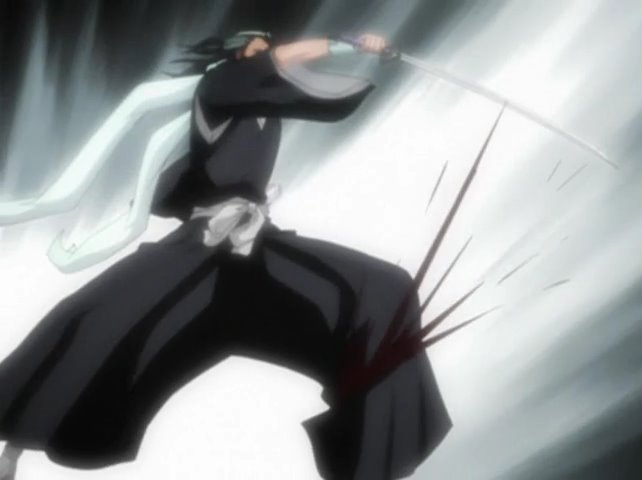
Sensory-added injury description: “The sword slashed across his leg. There was an awful ripping sound, and pain exploded from his calf, shocking through his entire body. A scream tore from his throat, filling his ears with a sound of pain and panic. His leg was suddenly hot and wet. The rusty scent of blood stung his nostrils. Crippled, he collapsed to his knees.”

* With the sensory descriptions added, you can easily see how the scene is given a much more vibrant dimension. The injury feels so much more real to the reader. They can now imagine how blood would smell, and how it would make that slight stinging sensation in the nose. They can feel the agonising tear of flesh, and the hot spill of blood soaking into the character’s trousers. They know what a loud shout does to their hearing; for a moment the sound fills the head completely.

Now, take note, there was nothing wrong with the basic descriptions of either example. They gave enough information for the reader to picture the scene, correct? And sure, anyone with a good imagination can easily fill in additional sensations on their own. However, you can see how much more the sensory descriptions contributed to the reality of each scene, and how it allows for the reader to delve right in and experience the events more intimately.

So, to tell a story, one cannot simply write that there is sadness in a heart, or darkness in the night, or tiredness in the legs, or anger in the voice. To tell a story, and tell it well, ones needs to reach out and draw from the senses. The reader needs to feel the aching of sorrow, taste the salt in the tears, the hear gasping sobs of breath; they need to perceive the thickness of deep shadow, feel the uncertainty of diminished sight, and experience the flutter of the heart at the sound of rustling leaves nearby. It should not only be the legs of the running character that are tired. The reader needs to feel the pain of the over-exerted muscles, and the heaving of each breath, and the inner fear of possibly tripping over at any moment. The character’s voice expresses anger, yes, but so does the rest of their body. Let the reader feel the heat gathering in the character’s face, let them see the fury burning in their eyes, and know just how livid this person is by how they are clenching their fists so tightly, their knuckles turn white.

Of course, you shouldn’t go overboard with sensory descriptions. There is always a time and place to add them to get the desired effect. If there is too much sensory layering, you risk over-loading the reader with excessive detail.

In reality, we absorb many times more sights, sounds and tastes in any given time and place. But you don’t need to explain every sensory reaction the character in your story would experience when walking into a forest. A lively forest would be brimming with sights and sounds and smells, but you only need to pick a couple to give the reader a real sense of being there; the scent of pine needles, the chirping of birds, the dancing motion of sunlight through the wind-swept tree branches. Having those three descriptions would give plenty of sensory flavour to the scene … so no, there is no need to go into detail about the branching veins in the arrow-shaped leaf of the plant curled up beside the gnarled root of the fire-charred oak tree. By the time you’ve finished such an explanation, your reader would have skimmed over several pages, and your character would have forgotten why he was traipsing through the forest in the first place!

At any rate, both the reader and the writer can understand and appreciate the importance of sensory-based descriptions. It’s the salt of a story; the element that gives a story its perceptible flavour. Without it, there would be no bridge connecting the two sides of the river. The story would not be real, and the reader would not be captivated.

So, fellow writers, remember to captivate those who wish to discover your tales! Draw life from your words, and bring colour to a page that expresses only in black and white. May we continue to create worlds that will be experienced as deeply and expressively as our own.

Posted in Information | Tagged , , , , , , | 2 Comments

Time Waits For No One

“Time waits for no one”

That small and simple quote holds a truly profound meaning, and is used as an important point of focus in the Japanese animation feature film, The Girl Who Leapt Through Time – which I only just recently watched (and find myself astounded and slightly shamed that I didn’t pick it up and watch it sooner!).

The DVD blurb covers the basic outline of the story well enough:

“Something strange has happed to Makoto Konno. Time has suddenly stopped and moved her backwards.

With her newly discovered ability to literally leap backwards in time, Makoto finds that tests become a piece of cake, embarrassing situations are corrected, and she can have her favourite food anytime she wants. Unfortunately, her carefree time travelling has adverse effects on the people she cares for.

With every successful leap, Makoto somehow alters the fate of those around her. This wasn’t supposed to happen, and she races back in time to fix everything, she notices that her abilities are not limitless, but with every successful jump she’s one step closer to discovering the most wonderful secret in your young adult life.”

After watching the movie, I was struck by a wave of emotions. I found myself thinking over and over again about its underlying messages, and about Time itself, and about how we each get a small piece of it to use in the relatively short span of our individual lives – and we only get to use it once. And right then and there, I was reminded of how precious Time really is, and how we need to embrace every moment, and not be so quick to forget the value of the present we all pass through. Because once a day is gone, unlike our protagonist Makoto, we can’t leap back through time to re-live it (or change things). Once it is lived, it is gone.

What this fun, amazing, beautiful story reminded me, was the importance of embracing things the way they are, yet strive to make things better, and to realise that what has already happened cannot and should not be changed and so should not bind you with remorse or regret.

The Girl Who Leapt Through Time left me with simultaneous feelings of pure delight, contemplative sadness and enduring hope. The animation is beautiful, the characters endearing and the story unforgettable. A lot of exceptional detail has been put into the animation, and the execution of the story delivers both in emotional experience, and cinematic quality.

Even if you are disinclined toward animation – see this movie. Even if you are critical toward time-travel paradoxes– set such thinking aside and watch this movie for the brilliance of the tale it is telling. If you enjoy fun, romance, heart-stirring themes, and a touch of science fiction – you must watch this movie!

And in closing, I want to remind everyone out there in the vast virtual world, that our lives are the only ones we get to live out on this earth. Life is a precious gift, and so is Time. Use both wisely, and joyfully, for you are here only for a short while.

“Man is like a mere breath; his days are like a passing shadow.”Psalms 144: 4

“Gather ye rosebuds while ye may,
Old Time is still a-flying;
And this same flower that smiles today,
Tomorrow will be dying.”
Robert Herrick

“I know there is nothing better for them than to rejoice and to do good in one’s lifetime.” – Ecclesiastes 3: 12

So Carpe Diem, fellow adventurers! Seize your day, wash away your regrets, make the most of the moment you are in here and now, and look to your future with purpose and hope.

Posted in General | Tagged , , , , , , , , , , , | Leave a comment

The Year of the Dragon!

Well now, here I am, the Whimsical Werecat, back from the many exploits that werecat’s often end up occupying themselves with. And what better way to mark this site with my presence once more, than to celebrate the start of this wonderful (and aptly named) year.

2012 – The Year of the Dragon according to the Chinese calendar; and to be even more precise about it, 2012 is the Year of the Male Water Dragon (or Black Dragon, seeing as water is connected to black in the Chinese Five-element System).
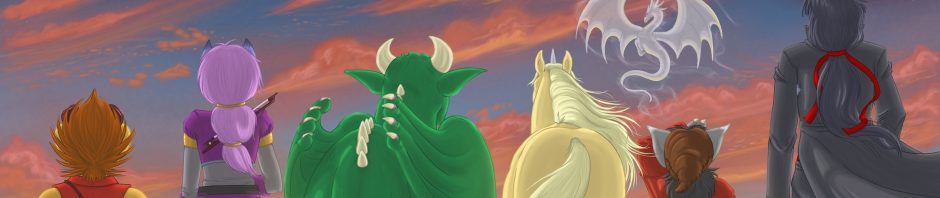
The Year of the Dragon. Yes. Very fitting, I should think, seeing as the book series this site is dedicated to, follows the adventures of one such creature. Although, suffice to say, our scaly, green protagonist is not a water dragon, nor is he black … obviously.

Depending on the culture, dragons represent and symbolise a variety of different things: Mystical, occult, noble, untouchable, sky, heaven, and to swing the pendulum the other way they are also associated with tyranny, greed, evil, and destruction.

Well, to reference the Valadilian culture (which is the most relevant culture for this site), it is universally acknowledged that dragons are the symbol of transcendence and might; the unity of Heaven and Earth. According to those versed in the study of manna and spirit energy, dragons are believed to thread energy around them (as opposed to move toward or away from). From this they believe the manna of a dragon is capable of creating new forms of balance, or chaos, over the things around them. There is no ebb or flow, draw or repel – only continuous circulation. And what is the relevance behind the telling of such a discovery, you might ask? I am a werecat who found an interesting piece of information and was gracious enough to share – that is relevance enough, thank you very much!

So, 2012, the Year of the Dragon, is certain to be an influential year on many levels. Perhaps new balances will be created – or perhaps new levels of chaos. Where the dragon moves, anything could happen. Nevertheless, no matter what is destined for this year, know that your actions determine what will come about for you. Your words will play an influential part, too. So take heed, mortals, and speak and act into existence the plans and purposes you want to achieve in 2012, and not the things that will lead you to ruin, rage or regret.

Now, diverting onto an entirely different path, for all those with a starry eye and a keen interest in all things celestial (as werecats are inclined to be) there is much to anticipate this year! Take the red planet, for instance: Mars will be at its closest approach to Earth and be fully illumed by the sun around March 3rd. Saturn will be at its closest approach and be fully illumed on April 15 – so if you have a good telescope, pull it out and take a look and see if you can see its rings!

For those who love to watch streaks of stellar rock burn across the sky, there are a few meteor showers to look out for.

April 21- 22 is the Lyrids Meteor Shower. Keep an eye on the constellation Lyra after midnight, to catch a glimpse of these meteors. You may also see some action in the sky as early as the 16th and as late as the 25th.

May 5 – 6 is the Eta Aquarids Meteor Shower. Not as grand as the Lyrids Shower and with a full moon looming in the sky, chances are you poor-sighted mortals won’t see much. Keep an eye on the constellation Aquarius after midnight for the radiant point of this sky show – for those who may still wish to try and catch a glimpse (preferably away from city lights)

July 28 – 29 is the Southern Delta Aquarids Meteor Shower. The radient point is, of course, the constellation Aquarius. Wait until the quart moon sets after midnight and keep your eyes eastward to get the best view of the show.

August 12 – 13 is one of the grandest of the meteor shows, the Perseids Meteor Shower! The radiant point of the show will be in the constellation Perseus, so look to the northeast after midnight and you shouldn’t be disappointed. You may also start to see meteors as early as July 23rd and as late as August 22nd. Be mindful that city lights will disrupt the visual ability of you lesser mortals, so it’s best to find a viewing location away from such large dwellings.

October 21 – 22 is the Orionids Meteor Shower. Meteors could possibly be seen as early as the 17th, to as late as the 25th. The moon will be set by midnight, leaving the rest of the night dark for a good viewing. Again, city lights will dim the experience, so the further from them, the better.

November 17 – 18 is the Leonids Meteor Shower.
This one should put on a good show, and the moon will set early, leaving the sky dark for a great viewing. Look for the shower radiating from the constellation Leo after midnight.

December 13 – 14 is the biggest and best of the meteor showers, the Geminids Meteor Shower. The Geminids are known for producing up to 60 multicoloured meteors at their peak! There will be a new moon this year, so the skies will be perfectly dark for this occasion. Keep your eye on the constellation of Gemini and your attention to the east, after midnight.

And then there are the Eclipses!

May 20th hosts the Annular Solar Eclipse. China, Japan, and North America will be able to view this one.


June 4th hosts a Partial Lunar Eclipse. Most of Asia, Australia, the Pacific and the Americas will be able to view this one.

November 13th hosts a Total Solar Eclipse, although only those in far northern Australia and the southern Pacific Ocean will be able to view the event in its full. A partial eclipse will be visible in most parts of eastern Australia and New Zealand.


November 28th
hosts the Penumbral Lunar Eclipse. This eclipse will be visible throughout most of Europe, eastern Africa, Asia, Australia, the Pacific Ocean and North America.

Other celestial events to really look out for are these two:

March 14th – the Conjunction of Venus and Jupiter. These two are the brightest “stars” in our skies, and this year they will be within 3 degrees of each other in the evening sky. On March 25th the crescent moon will be near them, which is sure to look quite stunning.

June 5th & 6th – the Transit of Venus across the Sun. This is one you don’t want to miss! It is an extremely rare event and will be visible throughout most of eastern Asia, eastern Australia, and Alaska. Partial transits can be viewed at sunrise across Europe, western Asia, and eastern Africa, and the progress at sunset can be viewed by those in North America, Central America and South America. If you remember to look out for this event, make sure not to miss it as the next transit won’t take place until the year 2117 (which isn’t a problem for werecats as we have much longer life spans than you humans). If you’re wondering how you’ll be able to see this when the sun is so blinding to your sensitive mortal eyes, that’s not my problem. Shield your eyes with dark glasses or something.

And there you have it, curious mortals: my ranting on the Year of the Dragon, and a calendar of wonderful celestial events for this year. I hope that has satisfied your inquisitive minds, at least until I return for the next instalment of my memorable, mesmerizing musings.

Always keep your curiosity and courage at hand, adventurers!
Posted in Werecat Whims | Tagged , , , , , , , , | Leave a comment